Shrimp Industry in India
White gut syndrome and EHP issues in L. vannamei shrimp farming.
White Gut and EHP severely damage vannamei growth and profitability. Combating WFS strings and EHP size variation requires strict hatchery PCR screening, pond hygiene, and proactive probiotics
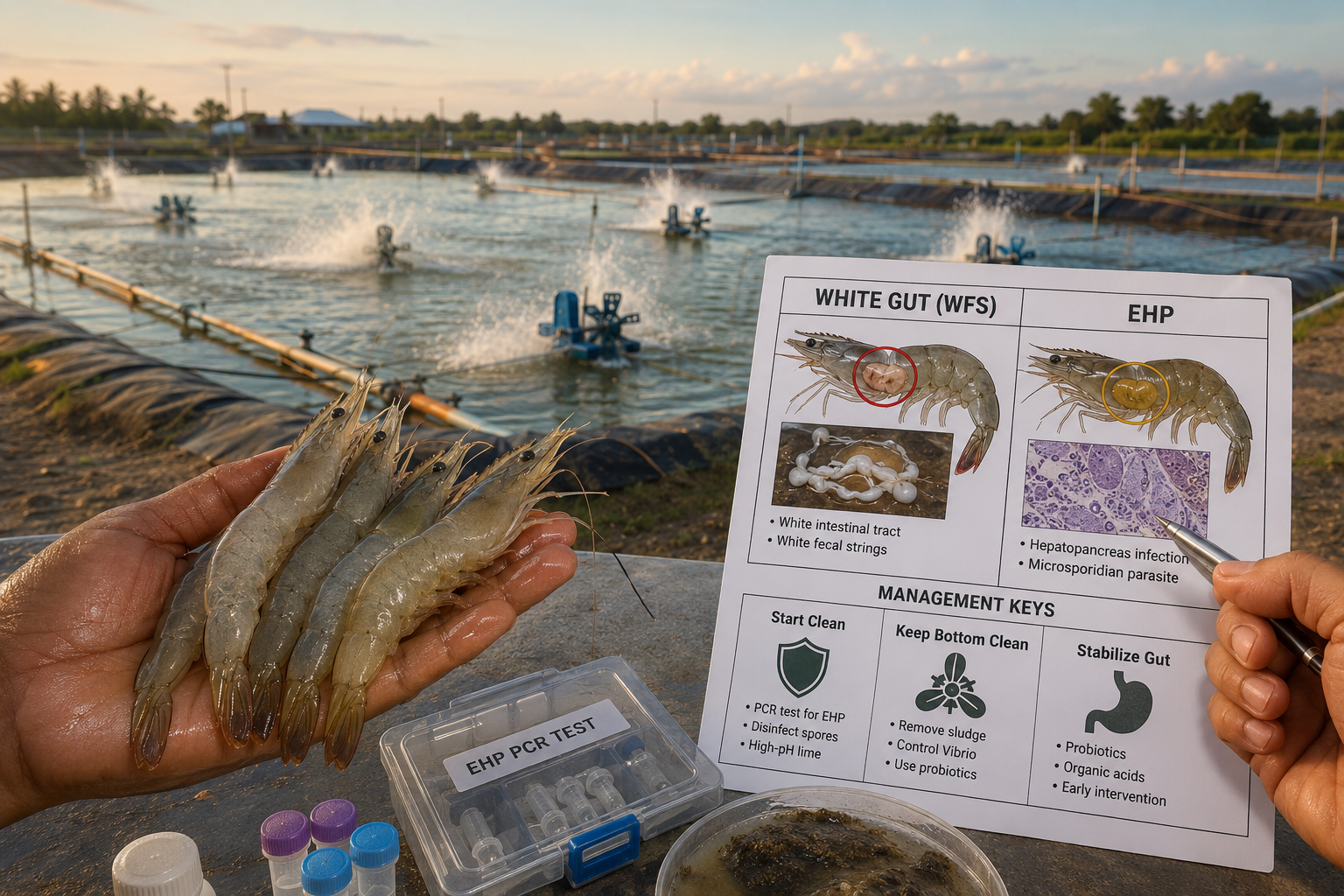
Managing White Gut (WFS) and EHP in Vannamei Ponds: A Field Perspective
If you are managing high-density vannamei ponds, you already know that maintaining gut health is easily half the battle. When the digestive system crashes, it usually comes down to two major headaches: White Feces Syndrome (WFS) and Enterocytozoon hepatopenaei (EHP).
While they target different pathways, both will quickly destroy your FCR, stall biomass growth, and eat into your margins if left unchecked. Here is a practical look at how these conditions operate and how to manage them on the ground.
White Gut / White Feces Syndrome (WFS)
WFS is a highly visible warning sign. It typically starts with a whitish discoloration of the shrimp’s intestinal tract and quickly progresses to floating white fecal strings accumulating on the downwind sides of the pond.
The Trigger: WFS is rarely triggered by a single factor. It is almost always an environmental issue meeting a bacterial spike. When organic waste and sludge accumulate on the pond floor, it creates an ideal breeding ground for pathogenic Vibrio bacteria and gregarine protozoa.
The Impact: Once the shrimp ingest these pathogens from a dirty bottom, the gut lining inflates and sheds. You will see an immediate drop in feed check-trays, followed by sluggish growth and poor weight gain across the affected sections.
EHP: The Silent Killer
While WFS gives you a clear visual warning, EHP is much more deceptive. This microsporidian parasite directly targets the hepatopancreas (HP): the metabolic engine of the shrimp.
The Impact: EHP doesn't typically cause sudden, massive mortalities. Instead, it slowly replicates inside the HP cells, completely blocking nutrient absorption.
The Telltale Signs: The biggest indicator of an EHP issue is severe size variation during sampling. Because the parasite spreads unevenly, you’ll find runts mixed with normal-sized shrimp in the same pond, which severely hurts your final harvest valuation. In later stages, it causes chronic background mortalities, soft shells, and leaves the shrimp completely defenseless against secondary bacterial infections.
Practical Prevention and Control Strategy
Once these pathogens establish themselves in a culture cycle, treating them effectively is incredibly difficult. Management relies almost entirely on strict biosecurity and aggressive pond hygiene.
1. Start Clean at the Nursery Stage
PCR Testing: Never rely on visual checks alone when sourcing PLs. Ensure strict PCR screening for EHP at the hatchery level before stocking.
Spore Disinfection: EHP spores are exceptionally resilient to standard chlorination. During pond preparation, use high-pH lime applications (like calcium oxide) on the moist pond bottom to create a high-alkalinity environment that forces the spores to fire and deactivate before water intake.
2. Keep the Pond Bottom Moving
Sludge Management: Adjust your aerator positions to ensure that physical waste, feces, and uneaten feed are continuously pushed toward the central drain. Getting the sludge out of the system before it goes anaerobic removes the primary fuel source for Vibrio spikes.
Microbial Balance: Use robust Bacillus strains to actively decompose heavy solid waste on the floor. Pairing them with photosynthetic bacteria, such as Purple Non-Sulfur Bacteria (PNSB), helps neutralize dissolved toxins like hydrogen sulfide ($H_2S$) in the lower, low-oxygen water columns.
3. Gut Stabilization
Early Intervention: Don't wait for white feces to appear before acting. Incorporate quality gut probiotics and organic acid binders into the feed early in the culture cycle. Coating the gut lining early makes it much harder for opportunistic bacteria to colonize the digestive tract.