Shrimp Industry in India
Indian Seafood Gets a Bigger Door into the UK Market
India’s seafood journey to the UK has gained momentum, creating fresh opportunities across the entire aquaculture and export supply chain
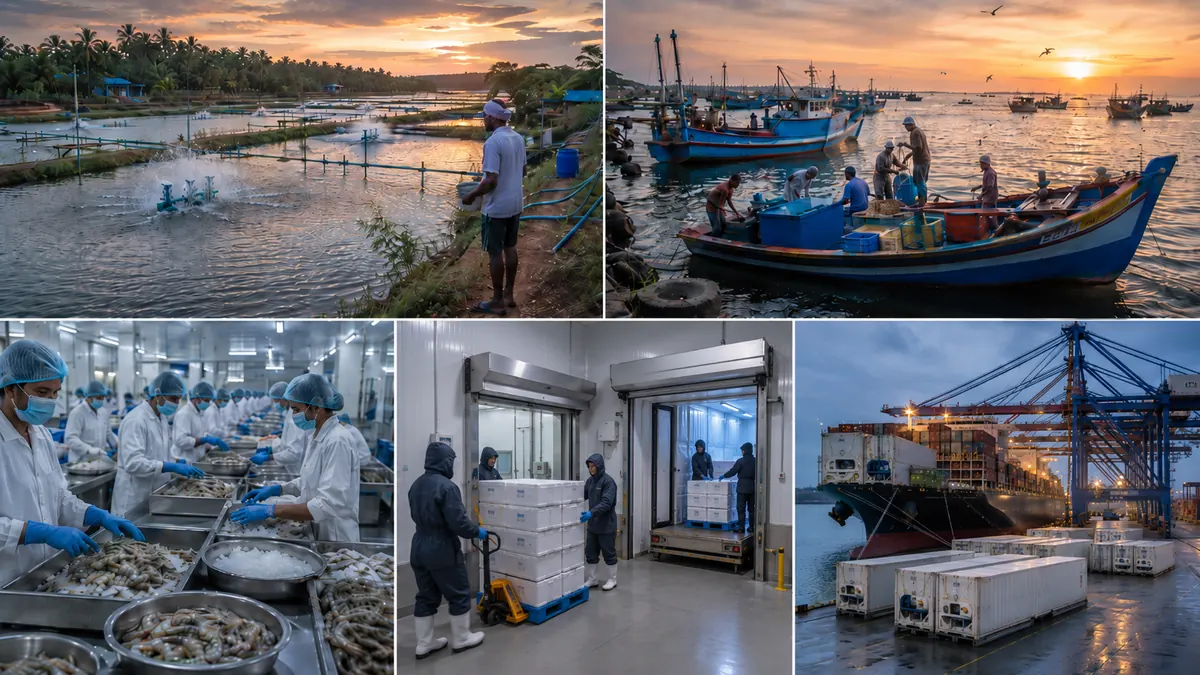
India has begun sending its first seafood shipments to the United Kingdom under the new India–UK trade agreement. The consignments left from Thiruvananthapuram on 14 July 2026, marking the start of improved market access for Indian marine products.
This is more than a ceremonial shipment; it opens a wider door for Indian seafood in the UK. The United Kingdom has a seafood market worth nearly US$6 billion, while India currently exports only about US$128 million worth of seafood there. Put simply, the UK seafood plate is large, while India’s present serving is still quite small.
Why This Shipment Matters
The new trade arrangement provides tariff elimination for marine products. According to the Marine Products Export Development Authority, this is expected to improve market access, reduce trade barriers and make Indian seafood more competitive in the United Kingdom.
This is particularly important for value-added and premium seafood products. India already supplies marine products to international markets, but better access to the UK could create more room for processed, carefully packed and higher-value products; not only basic frozen seafood.
A lower tariff can open the door, but the seafood still has to impress the customer after entering. Quality, food safety, consistency and dependable supply will remain important if Indian exporters want to build a larger and lasting position in the market.
The UK market is far larger than India’s current share, which means genuine room for growth. MPEDA will work with exporters and regulators to fully use the agreement and boost shipments of high‑quality, processed Indian seafood.
The Official Details Behind the News
The first consignments were flagged off on the night of 14 July 2026 from the Kerala State Industrial Enterprises Air Cargo Complex in Thiruvananthapuram. The event was organised by the Marine Products Export Development Authority, functioning under India’s Ministry of Commerce and Industry.
The shipments were exported by Gladson Exporters and Jude Foods India Pvt Ltd. They were among the first seafood consignments to receive preferential market access under the India–UK Comprehensive Economic and Trade Agreement, commonly called CETA. Customs, air-cargo, KSIE and MPEDA officials, seafood exporters and other industry stakeholders attended the flag-off.
More Than an Exporter’s Opportunity
The benefits of increased seafood exports do not stop at the processing plant or airport. MPEDA expects the agreement to create income opportunities for exporters, processors, fishers and the aquaculture farming community.
For aquaculture, every export shipment begins much earlier: in broodstock centers, hatcheries, nurseries and ponds. Seed quality, responsible feed use, disease management, residue control, harvest hygiene and traceability all influence whether the final product can meet export-market expectations.
In other words, the shrimp may board the aircraft in Thiruvananthapuram, but its UK journey actually begins in the hatchery and pond.
Final Word
The India–UK trade agreement has created a more favourable entry route for Indian seafood. It is good news for exporters, processors, fishers, aquaculture producers and everyone connected to the supply chain.
But tariff benefits alone cannot build a market. The long-term result will depend on quality, competitiveness and reliable supply.
Tariffs are gone. The opportunity is big. Now the seafood must shine.
Community

No approved comments yet. You can start the conversation.