Vannamei Hatcheries
Probiotics, Phages, Prebiotics & Postbiotics in Hatcheries
Modern hatcheries are replacing risky antibiotics with advanced biological weapons, deploying friendly bacteria and bacteriophages to secure the tank environment.
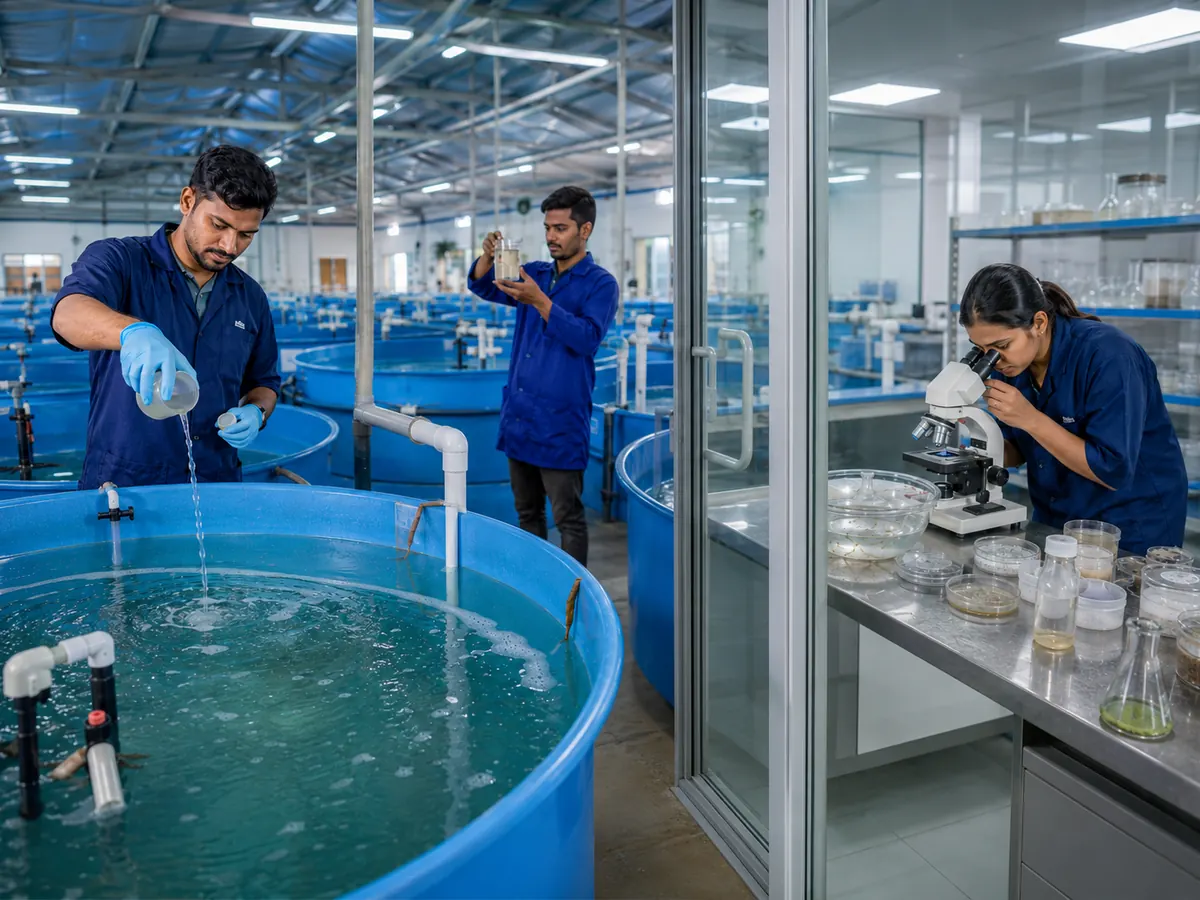
Managing a shrimp or fish hatchery is a high-stakes balancing act. In hatchery tanks, young larvae have underdeveloped immune systems, making them easy targets for opportunistic killers like Vibrio. With export markets rejecting antibiotic residues, the industry has shifted toward an advanced biological toolkit: Probiotics, Bacteriophages, Prebiotics, and Postbiotics.
Here is a journey to the microbial tools and technologies driving modern hatchery success.
1. The Probiotic Lineup: Friendly Bacteria
Probiotics act like a friendly army, occupying space in the tank and the larval gut to crowd out bad bacteria. A successful hatchery protocol uses a mix of specialized strains:
Gut Health & Immunity
Bacillus subtilis & Bacillus licheniformis: Highly resilient bacteria that colonize the larval gut lining. They form a physical barrier against pathogens and release digestive enzymes that improve feed absorption and growth.
Lactic Acid Bacteria (LAB): Strains like Lactobacillus produce organic acids that lower the pH inside the gut, creating an environment that is highly hostile to Vibrio.
Water & Waste Cleaners
Bacillus megaterium & Bacillus pumilus: These strains excel at breaking down organic waste, uneaten feed, and moulting shells in the water column, preventing dangerous ammonia spikes.
Purple Non-Sulfur Bacteria (PNSB): These photosynthetic cleanup crews thrive on tank bottoms, eating toxic hydrogen sulfide (H₂S) and organic waste. Because they are rich in proteins and vitamins, larvae also graze on them as a nutritious natural food.
Rhodopseudomonas palustris: The undisputed king for coastal vannamei shrimp hatcheries. It is highly salt-tolerant and excels in brackish and high-salinity marine environments.
Rhodospirillum rubrum: A unique, spiral-shaped species that is perfect for low‑salinity systems usually up to ~5 ppt.
2. Bacteriophages: The Guided Missiles
While probiotics occupy territory slowly, bacteriophages (phages) act like precision guided missiles. Phages are microscopic viruses that target, infect, and blast open specific pathogenic bacterial cells (Vibrio) without harming your larvae, biofloc, or beneficial probiotics.
Practical Hatchery Applications
Targeting Vibriosis: Phages are deployed to hunt down specific hatchery killers like Vibrio parahaemolyticus (the driver of AHPND/EMS) and Vibrio harveyi (luminous bacteria).
Phage Cocktails: Because bacteria adapt quickly, modern hatcheries use a blend of 3 to 6 distinct phage strains at once. If the bacteria mutates to block one phage, the others still destroy it.
Live Feed Enrichment: Phages can be added directly to the water or bio encapsulated inside live feeds like Artemia or rotifers. When the larvae eat the live feed, the phages go straight into the gut where the toxins do the most damage.
3. Next-Gen Microbial Technologies
Many emerging microbial management technologies now aim to make biological tools more targeted, stable, and effective. Instead of simply adding generic microbial powders, these newer approaches help probiotics, prebiotics, postbiotics, and other bio-tools work in a smarter and more predictable way.:
Quorum Quenching: Pathogenic Vibrio only release toxins when their population reaches a high enough density, which they measure by sending out chemical signals. Some next gen probiotics feature "Quorum Quenching" abilities; they produce enzymes that destroy these signals, leaving the pathogens "blind and deaf" and unable to launch an attack.
Synbiotics (Prebiotics + Probiotics): This is the deliberate pairing of a probiotic with a prebiotic (a specific fiber/fuel source that that preferentially supports beneficial microbes). When the pairing is correct, synbiotics can help probiotics establish better, support gut balance, improve immunity, and reduce pathogen pressure.
Postbiotics: Postbiotics are inactivated, heat killed beneficial bacterial cells or their metabolic components. For hatcheries, they offer huge practical advantages: they provide immediate immune boosting benefits to the larvae, have a massive shelf life, and because they are not alive, they consume zero dissolved oxygen (DO) in your tanks.
Microencapsulation: To prevent probiotics from washing out of the tank before larvae can eat them, manufacturers now coat live cells inside digestible, micro-spherical matrices tailored to match the tiny mouthparts of early PL stages.
Practical Takeaways for Hatchery Managers
Reduce Vibrio, Then Rebuild Good Bacteria: Use phages as a rapid response tool to knock down sudden Vibrio spikes in the water, then immediately follow up with multi-strain probiotics to claim that empty space before new pathogens move in.
Match the PNSB to Your Salinity: Use Rhodopseudomonas palustris if you are running a typical saltwater shrimp hatchery and save Rhodospirillum rubrum for freshwater or low salinity setups.
Use Postbiotics During Sensitive Periods: When larval density is high and oxygen is difficult to manage, postbiotics can be useful because they are not live bacteria and do not consume oxygen. They may support gut health and immunity, but the result depends on the product, dose, strain, and larval stage.
Be Early, Not Late: Do not wait for disease signs before using probiotics. Start with good probiotics early and regularly. Beneficial bacteria work best when they settle first, take up space, use available nutrients, and make it harder for harmful bacteria to dominate the tank.
Community

No approved comments yet. You can start the conversation.