Vannamei Farming
Microbial Tools in Aquaculture: Beyond the Word “Probiotic”
Microbial tools are not shortcuts. They are part of smarter pond and hatchery management.
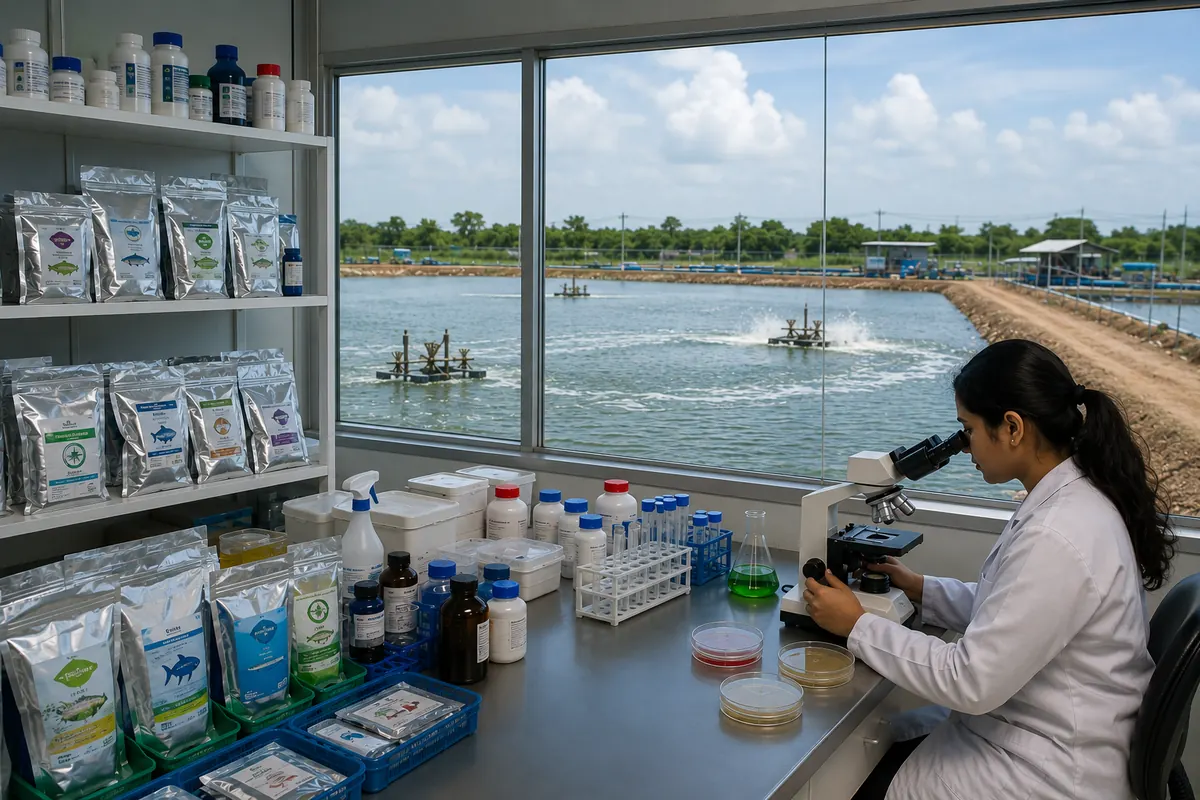
In aquaculture we often hear one word repeated: probiotics. Farmers use them in ponds, tanks, nurseries, and grow-out systems. They work best when the pond or tank is already well managed with good oxygen, controlled feeding, a clean bottom, healthy seed, and proper biosecurity.
Microbial management is no longer just about adding a single generic powder. Today we have a range of biological tools: probiotics, prebiotics, postbiotics, bacteriophages, yeasts, and more, and each has a specific role. The goal is not to use everything blindly but to understand which tool is appropriate for each situation.
To choose wisely, farmers must understand the purpose of each microbial group.
1. Probiotics: The Helpful Live Microbes
Probiotics are live beneficial microbes. When used correctly, they can help improve gut health, water quality, waste breakdown, and microbial balance. In shrimp farming, commonly used probiotics include selected strains of:
- Bacillus subtilis
- Bacillus licheniformis
- Lactic acid bacteria like Lactobacillus
- Photosynthetic bacteria like PNSB
Bacillus is often used because it is strong, stable, and can form spores. It may help break down organic waste, compete with harmful bacteria, and support digestion. But probiotics are not emergency medicines. If the pond bottom is already black, oxygen is low, and shrimp are stressed, adding more probiotic alone will not solve the problem. The practical takeaway is simple: Use probiotics early and regularly, not only after disease signs appear.
2. Prebiotics: Food for Good Bacteria
Prebiotics are not bacteria. They are special nutrients that help beneficial bacteria grow better.
In simple words: Prebiotic = food support for good microbes.
They may be added through feed to support gut health and improve the action of probiotics. When a probiotic and prebiotic are used together, it is called a synbiotic. But prebiotics should also be used carefully. Not every prebiotic suits every situation. Wrong selection or overuse may not give results and may even support unwanted microbes.
The practical takeaway: Prebiotics are useful when they are matched with the right probiotic and used at the right dose.
3. Postbiotics: Benefits Without Live Bacteria
Postbiotics are useful components of beneficial microbes, but they are not alive. They typically include inactivated microbial cells, cell-wall fragments, and other useful components that come along with the inactivated microbes. This can make them useful in hatcheries and nurseries, especially when larval density is high and oxygen management is critical.
Their primary advantage is that they do not need to survive in the water or the gut to provide a benefit. Because they are non-living, they also do not consume dissolved oxygen. However, since they lack life, they cannot colonize the gut like live probiotics, nor can they degrade pond sludge.
The practical takeaway: Postbiotics are support tools for gut health and immunity, not replacements for live probiotics or good pond management.
4. Bacteriophages: Targeted Tools Against Specific Bacteria
Bacteriophages, or phages, are specialized viruses that hunt and kill harmful bacteria like Vibrio. They are completely different from probiotics because they don't clean up bottom sludge or improve water quality; their only job is to reduce specific target bacteria. While individual phages could only fight one or a few bacterial strains, modern commercial phage products are designed to target multiple bad bacteria at the same time.
The practical takeaway: Phage products act like a cluster of guided missiles, knocking down several types of harmful Vibrio at once while leaving your friendly probiotics completely untouched.
However, because they leave empty space behind after destroying the bad bacteria, you must follow up with live probiotics immediately to occupy the tank before wild pathogens can move back in."
5. PNSB: Photosynthetic Support Bacteria
Purple Non-Sulfur Bacteria, or PNSB, can act as photosynthetic cleanup crews for the pond systems. They eat up organic waste and toxic hydrogen sulfide gas, while also serving as a highly nutritious natural food source when shrimp ingest them while grazing on the mud. However, they are sensitive tools that require the right amount of sunlight, organic load, and salinity to do their job.
The practical takeaway: PNSB acts as a dual-action asset that clears the deadliest gas from your pond floor and transforms it into a free, high-protein snack for your shrimp.
Choose PNSB strains that match your salinity and system. They are support tools, not a replacement for aeration, sludge removal, and pond-bottom management.
6. Yeast: Feed-Based Gut and Immune Support
Yeast-based products are useful microbial tools in aquaculture, especially through feed. Selected yeasts such as Saccharomyces cerevisiae may help support gut health, digestion, immunity, and stress resistance. Yeast is also valued for its cell-wall components, especially beta-glucans and MOS. These can help support the shrimp’s natural defense system and improve gut balance.
But yeast should not be treated like a pond-bottom cleaner. It does not work the same way as water probiotics used for sludge or organic waste breakdown. Its main role is inside the animal, through feed. One mistake is thinking all yeast products are the same. Product quality, processing method, dose, and application route matter a lot.
The practical takeaway: With yeast, think of gut and immune support — not pond-bottom cleaning.
What Farmers Should Remember
Microbial tools work best when the pond environment supports them.
- Good oxygen is important
- Controlled feeding is important.
- Sludge removal is important.
- Good seed quality is important.
- Avoiding unnecessary chemical use is important.
- Do not mix live probiotics with strong disinfectants or chemicals, as they may kill the beneficial microbes.
- Do not overdose blindly. More products do not always mean better result.
- Do not expect probiotics to remove EHP, cure WSSV, or fix a badly managed pond overnight.
- Golden Rules of Application
- Maintain environmental fundamentals: Good dissolved oxygen, controlled feeding, quality seed, and strict biosecurity are required. Bioremediation cannot fix a fundamentally mismanaged pond.
- Protect your investment: Never mix live probiotics with strong disinfectants or chemicals, as these treatments will instantly kill your beneficial microbes.
- Avoid blind overdosing: More products do not always mean faster results. Stick to proper dosages and remember that probiotics are not designed to remove EHP or cure WSSV overnight.
Simple Selection Reference
Match the Tool to Your Specific Management Goal
- For gut health, use good probiotics, prebiotics, synbiotics, or postbiotics.
- For water and waste support, use selected Bacillus, PNSB, good aeration, and sludge removal.
- For specific Vibrio pressure, Use tested probiotics and multi-targeted commercial phages.
- For high-density culture periods, postbiotics can be useful because they do not consume oxygen.
- For long-term prevention, start microbial management early instead of waiting for disease signs.
Final Word
We are still learning how to use microbial tools better in aquaculture. Probiotics, prebiotics, postbiotics, PNSB, and phages all have distinct, highly specialized roles. They are incredibly powerful assets to support your crop, but they are not replacements for excellent farming practices. The best results and the highest profits always come when you use the right tool, at the right time, for the right reason.
Probiotics are not magic medicines. They are support tools.
Community
No approved comments yet. You can start the conversation.