Vannamei Farming
White Feces: The EHP Connection
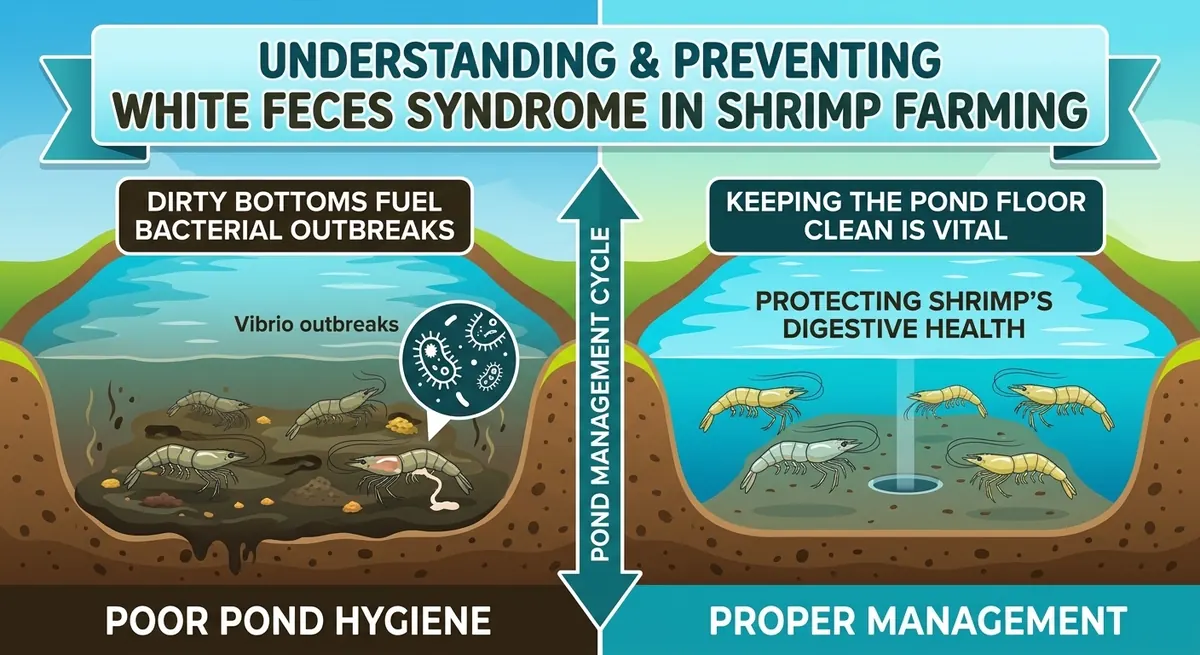
White feces string in vannamei ponds often indicate EHP related hepatopancreas damage. These strings spread infection as other shrimps graze on them, making pond‑bottom cleanliness essential.
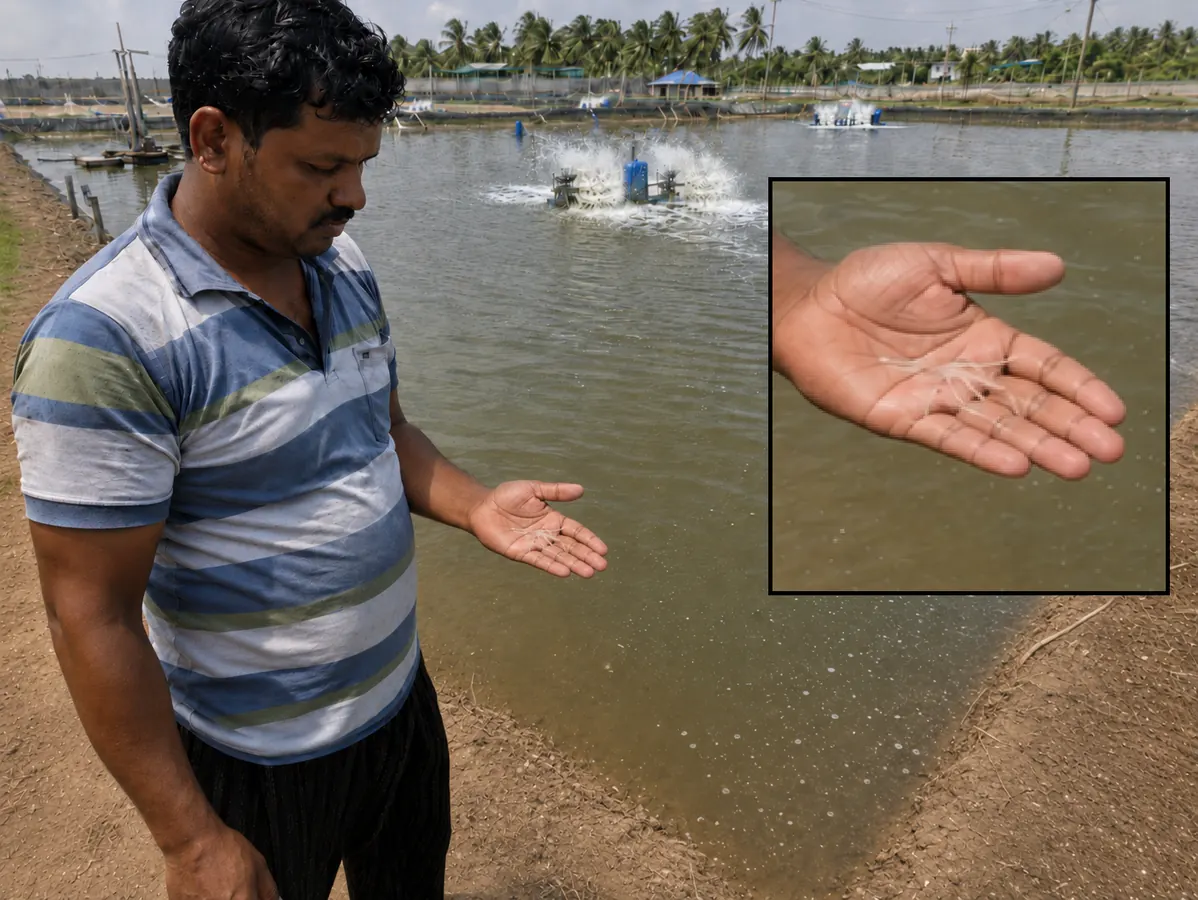
There are few sights more stressful for a vannamei farmer than seeing white fecal strings floating in the corners of a pond or collecting in check trays. White Fecal Syndrome (WFS) is a clear warning sign that something is going wrong inside your shrimp. It is often followed by reduced feeding, poor growth, size variation, higher FCR, and severe economic losses.
What Triggers White Fecal Syndrome?
WFS is a complex condition, meaning it rarely has just one single cause. When we look at a pond suffering from white feces, several factors are usually at play:
High Bacterial Load: Particularly an overgrowth of harmful Vibrio and other gut associated bacteria.
Environmental Stress: Poor water quality, pond bottom waste, toxin build-up, and sudden blue green algae crashes.
Enterocytozoon hepatopenaei (EHP): EHP usually enters the pond through infected PL, contaminated equipment, or contamination from other farms. EHP alone does not always cause WFS, but it is the strongest underlying factor that makes shrimp vulnerable to white feces outbreaks.
While we can discuss bacterial and algae factors in detail in a future blog, today we are focusing only on EHP.
Role of EHP on White Fecal Syndrome
To understand why EHP is strongly linked with white feces, we have to look at what the parasite does inside the shrimp’s digestive system. EHP cannot multiply freely in the water or the mud. It needs the shrimp to ingest it so that it can replicate.
Shrimp pick up the spores while grazing on biofilm, detritus, white fecal strings, or pond bottom waste. Once inside the shrimp, EHP mainly targets the epithelial cells of the shrimp’s hepatopancreas, the main digestive and nutrient-absorption organ. As it multiplies, it damages these vital cells and reduces the shrimp’s ability to digest and convert feed into growth.
When infected hepatopancreatic cells become heavily damaged, they may rupture, die, and slough off. The damaged tissue, cellular material, mucus, and gut contents can peel away and enter the digestive tract.
The White Fecal Formation: This mixture of sloughed tissue, mucus, cellular material, microbes, and in some cases spores, pass through the gut. The shrimp then releases it into the pond as the white fecal strings we see floating on the water surface, collecting in corners, or appearing in feed check trays.
The Pond Environment Speeds Up the Disease
When WFS sets in, the pond floor, sludge zones, check trays, water surface and practically everything can become temporary reservoirs for contaminated white fecal strings and spores. Other shrimp graze on these strings, taking in heavy doses of EHP spores, creating a shrimp‑to‑shrimp transmission loop.
EHP cannot multiply in water or soil, but the pond environment can still act as a temporary reservoir for contaminated feces. If we allow these white strings to drift, settle, and remain in the pond, we are leaving a direct delivery system of infection right where the shrimp feed and graze. The more shrimp graze on this infected waste, the faster EHP can spread from shrimp to shrimp. At the same time, poor pond bottom condition and harmful bacterial growth can make the gut damage worse, causing a WFS outbreak.
Key Takeaways for Farmers
WFS Is a Sign of Internal Digestive Damage
White feces are not just poor digestion. They may contain sloughed hepatopancreatic tissue, mucus, gut material, microbes, and in many EHP-positive ponds, EHP spores.
The Spore Vector
White fecal strings from EHP positive shrimp can carry dense EHP spores. When other shrimp eat them, the disease pressure in the pond can increase quickly.
A Multi-Factor Battle
EHP can damage the hepatopancreas and set the stage for WFS, but Vibrio, other gut bacteria, pond-bottom waste, blue-green algae crashes, toxins, and environmental stress usually make the outbreak much worse.
What this teaches us is that once a pond shows widespread White Fecal Syndrome, trying to cure the shrimp with internal treatments or feed additives is very difficult because their digestive organs may already be heavily damaged. Feed additives may support gut and hepatopancreas recovery, but they cannot reliably remove EHP from the pond.
Our strategy must focus on breaking the environmental spread chain.
Final Word
Protecting our investment starts with clean seed backed by proper PCR testing. After stocking, the focus shifts to keeping the pond bottom clean and reducing waste buildup. Whether using central drainage, side drains, or simple siphoning, regular removal of sludge and white fecal strings from check trays and pond corners helps prevent shrimp from re‑ingesting contaminated material. Water exchange should be done only when the incoming water is properly settled, disinfected, and safe.
Keeping the culture environment clean of infected feces and sludge is how we cut the power to the EHP‑WFS spread chain and protect our ponds.
Community
No approved comments yet. You can start the conversation.