Vannamei Farming
The Truth About Vitamins, Minerals & Real Farm Performance
Vitamins and minerals are non-negotiable for aquaculture; for shell formation, immunity, and growth. However, cheap or unprotected supplements melt into the water in minutes. To avoid throwing money into the pond, use water stable, encapsulated nutrients that stay inside the pellet until eaten.
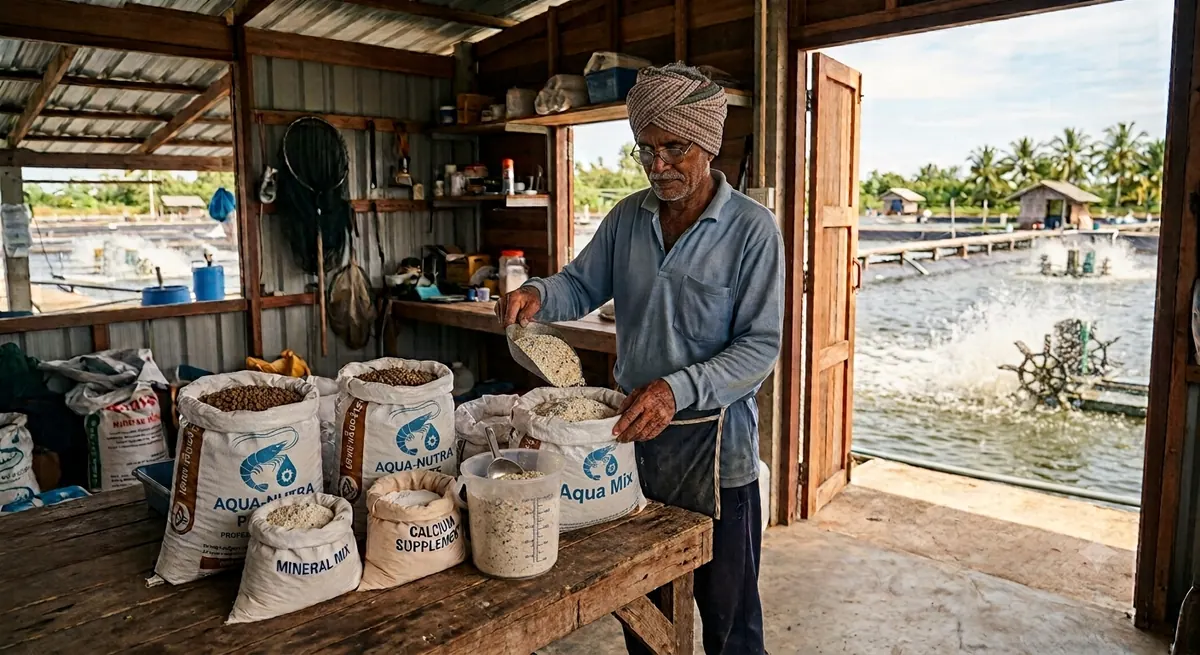
If you look at your feed bill, vitamin and mineral premixes might seem like an extra expense. Many farmers ask: Are these additional costs really doing anything, or are they just marketing hype?
The short answer: Vitamins and minerals are 100% essential, but only in the right amounts. Poor quality feed, heat, bad storage, weak pellets, or cheap nutrient forms can destroy these vital ingredients before your shrimp or fish ever get a bite, especially water-soluble vitamins!
Here is the truth about how micronutrients work, why some feeds fail, and how to make sure you get every bit of performance you pay for.
What They Actually Do (And Why You Can't Skip Them)
Shrimp and fish do not need mountain-loads of vitamins and minerals, but they simply cannot survive or grow without them.
- Minerals (Calcium, Magnesium, Phosphorus): Calcium, magnesium, and phosphorus are the primary building blocks that help shrimp lock in a rock-hard new shell right after molting. A lack of minerals causes soft shells and molting stress, though soft shells can also be triggered by poor water quality, high nitrite, disease, or a dirty pond bottom. For fish, minerals build strong skeletons and balance body fluids.
- Vitamins (Vitamin C, E, and B-Complex): Think of vitamins as your crop's armor. Vitamins C and E power up immune defense and fight off stress, while B-complex vitamins act as biological engines, converting proteins, fats, and carbs into pure energy and fast muscle growth.
- The "Weakest Link" Rule: Think of crop growth like a chain. A serious shortage of even one key vitamin or mineral will snap your progress; stunting growth and health even if your feed is packed with expensive protein!
Why Some Farmers Think It’s "Hype"
The reason many farmers feel micronutrients don't work usually comes down to three common feed traps:
- Nutrients Wash Away in Water: Unprotected, water-soluble vitamins, especially basic Vitamin C, can wash right out of the pellet in minutes. Depending on pellet stability, water temp, and how slowly your stock feeds, those precious vitamins melt away, turning your investment into useless pond waste!
- Heat Kills Unprotected Vitamins: High heat, moisture, and long storage destroy sensitive vitamins. Top feed makers stop these losses by using heat-stabilized nutrient forms and smart safety buffers during manufacturing.
- Cheap Minerals Aren't Absorbed: Cheap, raw inorganic minerals often pass straight through the gut without being absorbed. High-quality organic or chelated minerals are far easier for the animal to digest, though actual absorption always depends on the specific mineral, diet, dosage, and water conditions.
Fact vs. Myth
Myth: "Shrimp get all the minerals they need directly from the pond water."
Fact: Shrimp can absorb calcium, magnesium, and key ions straight from the water, depending on your salinity and water balance. But phosphorus MUST come from their feed. Natural pond water provides almost no usable phosphorus!
Myth: "Adding twice as many vitamins will make animals grow twice as fast."
Fact: Pouring extra vitamins past what the body needs does not equal double growth. Excess nutrients either flush out as waste or accumulate to toxic levels, which can throw off body chemistry and actually harm your crop.
How to Get Your Money’s Worth
To ensure your stock actually gets the nutrients you pay for, focus on quality and timing over raw quantity:
Look for Protected Forms: Choose feeds built with encapsulated vitamins and chelated (organic) minerals. Encapsulation keeps vitamins locked inside the pellet so they don't dissolve in the pond, while chelated minerals boost gut absorption.
Target High-Stress Times: During heavy rain, sudden salinity drops, prolonged stress, or ionic imbalances, test your water chemistry first before throwing in extra supplements. Correct mineral dosing should always be calculated based on your salinity, alkalinity, calcium, magnesium, and potassium levels.
Check Water Stability: Ensure your feed pellets stay whole and firm in the water. You want those rich nutrients inside your crop's gut - not settling into the pond mud!
The Verdict
Vitamins and minerals are not hype; they are the core engines behind health, fast metabolism, strong shells, and disease resistance. The "hype" only begins when every pond problem is blamed on a feed shortage, or when expensive supplements are dumped in without checking water quality, salinity, and real farm needs first.
Investing in stable, bioavailable micro-nutrition and applying it with smart farm management is what truly protects your harvest and powers up your farm's bottom line!
Community
No approved comments yet. You can start the conversation.