Vannamei Farming
White Feces: Bacteria and Environment
Figuring out why white feces spread reveals that dirty bottoms fuel bacterial outbreaks. Keeping the pond floor clean is vital to protecting the shrimp's digestive health.
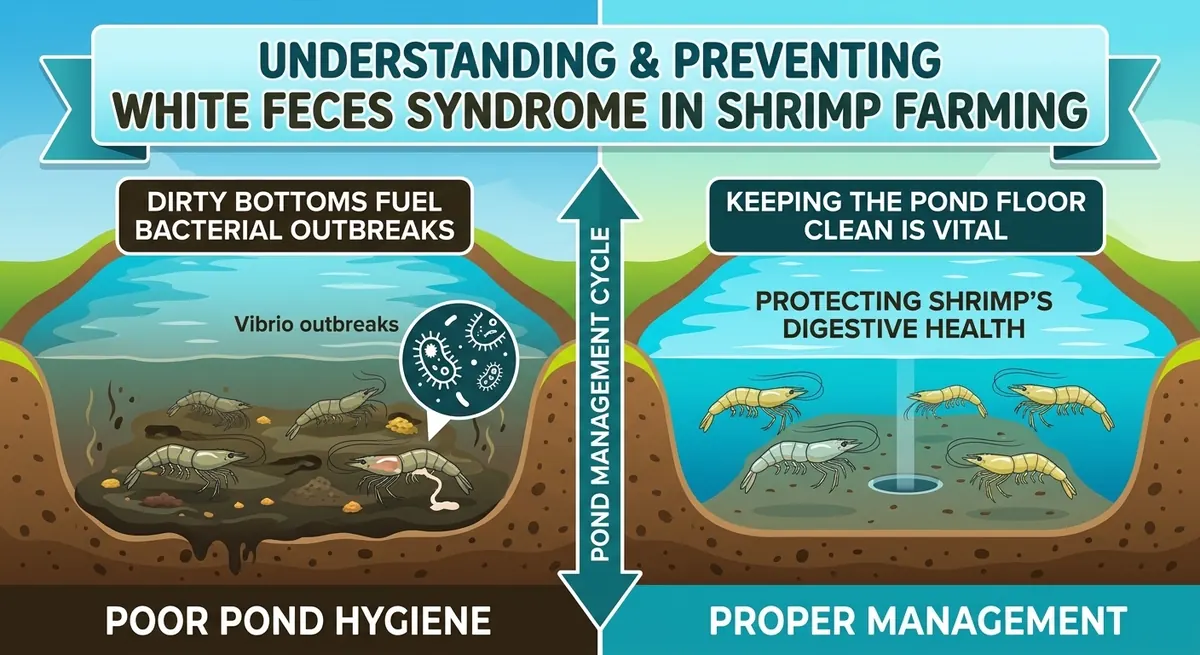
The 3 Triggers of White Feces
Parasites might start the damage, but these three pond conditions are what trigger a total WFS breakout:
Vibrio Spikes: High waste fuels dangerous Vibrio bacteria. Shrimp eat them, and the bacterial toxins tear into their digestive organs.
Algae Crashes: When blue-green algae die and sink, they release poisons into the mud. Grazing shrimp eat these toxins, damaging their gut lining.
Dirty Bottoms & Low Oxygen: Thick sludge and low oxygen stress the shrimp, knocking out their natural immunity against diseases.
Quick Tip: Because EHP, bacteria, and bad sludge all produce the exact same white strings, always run a lab or PCR test to confirm the true cause before spending money on treatments.
How the White Feces Spreads Across the Pond
White fecal strings aren't just bad digestion; they are the physical pieces of an injured gut. The infection multiplies across your pond through a fast, four-step loop:
Irritation: High Vibrio loads, bad sludge, and algae toxins irritate and heavily damage the shrimp’s main digestive organ (the hepatopancreas).
Shedding: The damaged gut lining dies and peels off, much like skin peeling from a severe burn.
Floating: This mixture of dead tissue and bacterial slime gets squeezed out, forming gooey white strings that float to the pond corners.
The Spread: Because shrimp are scavengers, healthy ones eat these floating strings. They ingest a massive, concentrated dose of bacteria and toxins, rapidly spreading the damage pond-wide.
Why the High-Density Pond Fuels the Fire
The sickness happens inside the shrimp, but the fuel comes from the pond bottom. In intensive farming, heavy feeding means waste builds up fast. While parasites need a host to grow, harmful Vibrio bacteria can multiply freely right in that organic sludge.
When the pond floor is crowded and dirty, the shrimp are trapped in a space with rising bacterial counts and toxic algae residue. This constant exposure completely breaks down their natural immunity. The shrimp's habit of eating feces accelerates the spread at an alarming speed, leading to sudden feed drops and severe size variation.
Key Takeaways for Farmers
Vibrio is the Spark: Rising bacteria in the sludge directly trigger white feces outbreaks.
Manage the Bloom: Crashed algae release dangerous compounds that irritate the shrimp's digestive system.
Immunity Fails Under Stress: Poor water quality and low dissolved oxygen completely destroy the shrimp’s natural ability to fight off bacterial infections.
Final Word
Feeding remedies to shrimp while allowing Vibrio to skyrocket in the sludge is an uphill battle. Because WFS is driven by environmental stress, your best defense is a strict sanitation routine:
Keep DO High: Maintain oxygen above 4-5 ppm to keep shrimp immunity strong.
Remove Sludge Daily: Use central drainage or regular siphoning to suck out bacterial fuel.
Use Probiotics: Apply quality strains to actively outcompete harmful Vibrio.
Keep it clean, keep it stable, and you will cut off the triggers for WFS before it risks your harvest. By maintaining a clean environment and keeping bacterial loads low, you safeguard both your shrimp's gut health and your final profit margins.
Community
No approved comments yet. You can start the conversation.