Vannamei Farming
Sludge Removal from Live Vannamei Ponds
Removing sludge from a live pond is a delicate operation; the goal isn't to aggressively scrub the floor, but to collect waste into a single zone and remove it gently.
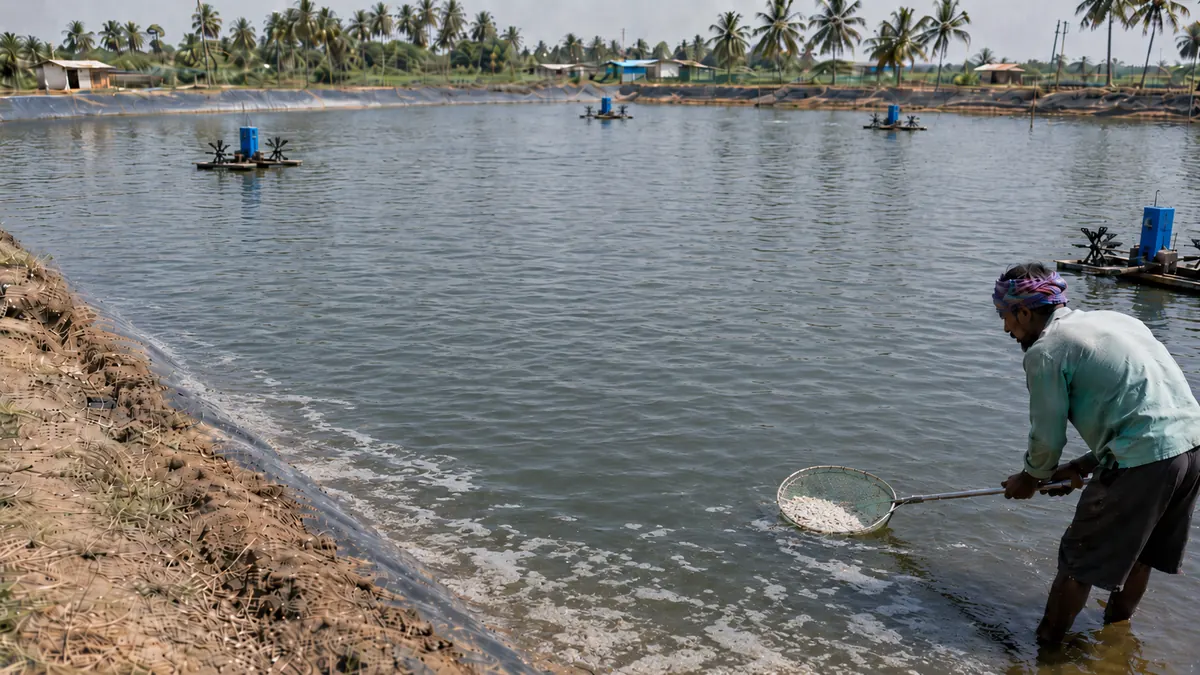
Removing sludge from a live shrimp pond is a delicate operation. If done too roughly, you risk unleashing buried bottom toxins, stressing your crop, and injuring shrimp through high-suction pipelines. The goal isn't to aggressively scrub the pond bottom; it is to collect waste into a single zone and remove it gently.
The Core Principle: Collect, Don't Chase
Never try to vacuum an entire earthen pond floor. Doing so disturbs clay and black soil, ruining your water quality.
Instead, use your aerators strategically. Proper aeration does more than provide oxygen; it creates a circular current that naturally guides waste toward specific accumulation zones like the pond center, corners, or dead water areas. Once the sludge is concentrated, you can harvest the waste without disturbing the rest of the pond.
Method 1: The Central Drain System
For lined ponds, nursery tanks, and well-designed intensive systems, a sloped bottom paired with a central drain is the gold standard.
How it Works: Aerators create a vortex that concentrates feces and dead plankton directly over the central point.
Safety Essential: The drain mouth must feature a protective screen or mesh rack to prevent shrimp from being sucked out.
The Field Rule: Open the drain slowly to remove only the thick, dark organic sludge. Close the valve immediately once the discharge turns to thin, clay-brown water; this is critical to prevent erosion if your pond bottom is not lined.
Method 2: Siphoning Ponds Without Central Drains
Many traditional earthen ponds lack central drainage. In these setups, you must use portable sludge pumps, airlift pumps or siphon hoses; but they must be modified to protect your crop:
Hover, Don't Drag: Keep the suction head slightly elevated above the sludge layer. Dragging a bare pipe scrapes the soil, causing long-lasting water turbidity.
Lower the Pressure: Never use a plain, open-ended pipe. It will mutilate shrimp antennae, legs, and soft-shelled moulters.
Use Protection: Always shield the intake with a perforated PVC head, a smooth plastic basket, or a mesh-covered hood. Widening the suction area reduces direct pulling force, keeping your shrimp safe.
Floating White Feces Need Separate Removal
Bottom siphoning alone will not remove all white fecal strings. Many white fecal strings float, collect in pond corners, stick near check trays, or gather along surface scum lines. Because shrimp are natural scavengers, they will pick at and graze on these floating strings. You must remove them from the water surface separately using: Fine scoop nets or corner collection nets, Surface skimmers or Manual removal from pond edges and intensive tray cleaning.
Timing and Troubleshooting
Timing your cleaning can mean the difference between a healthy pond and a mass mortality event.
Best Time to Clean
- Mid-morning after DO improves naturally
- Right before a scheduled feeding
- On stable, calm weather days
- When aerators are fully running
Times to Absolutely Avoid
- Early morning low-DO windows
- Peak moulting phases
- Immediately after heavy feeding
- During heavy rains or sudden pH/salinity shifts
Critical WFS Note: Bottom siphoning alone cannot capture floating white fecal strings, which gather in corners and surface scum lines. Because shrimp will scavenge and eat these contaminated strings—recycling EHP spores and bacteria—you must manually scoop them out using fine surface nets.
Advanced Systems Still Need Sludge Control
Modern culture systems like HDPE-lined ponds, biofloc, and Recirculating Aquaculture Systems (RAS) make waste collection highly efficient, but they do not make waste disappear.
Even in biofloc systems, where microbes convert nitrogenous waste into biomass, excess heavy solids settle rapidly. Left unmanaged, this buildup suffocates the beneficial biofloc and triggers disease. No matter how advanced your setup is—whether it utilizes settling tanks, drum filters, or automated center drains—regular, physical waste removal remains mandatory.
Key Takeaways for Farmers
Guide the Waste: Use your aerator currents to concentrate sludge into a single zone instead of chasing it across the pond.
Watch the Color: Stop siphoning or draining the second your wastewater switches from dark organic sludge to clay-brown mud.
Protect the Shrimp: Always use mesh guards or perforated heads to lower suction pressure and prevent physical injury.
Clean the Surface: Manually scoop out floating white feces from corners and feed trays to break the disease-transmission loop.
Final Word
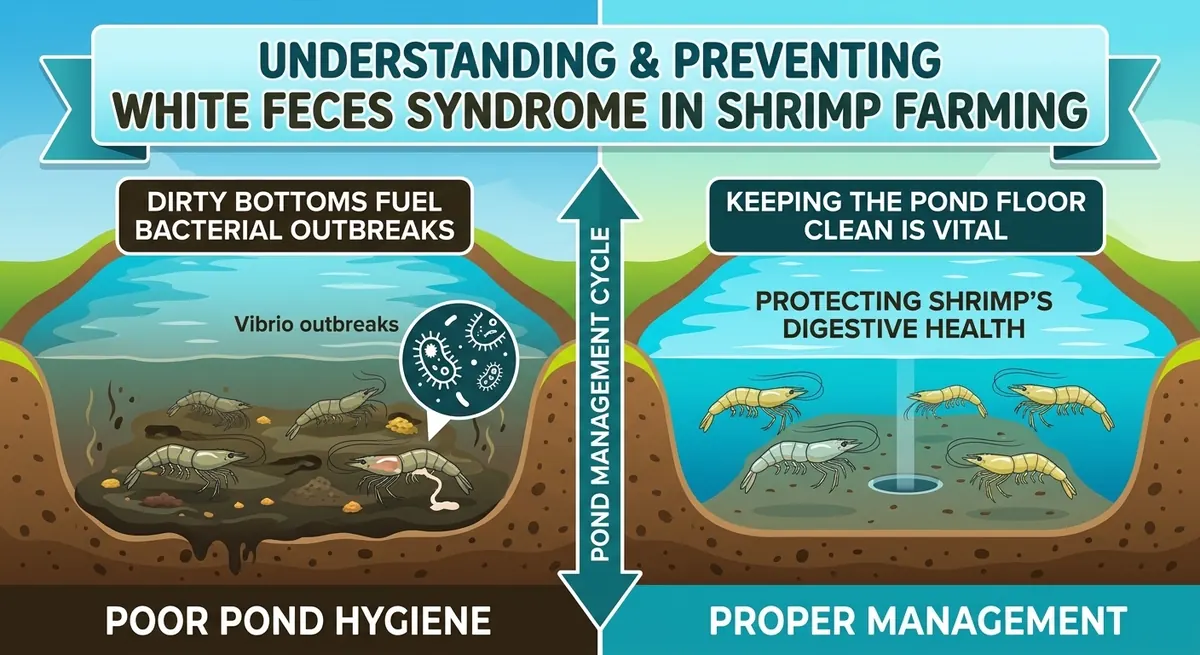
In a vannamei pond, sludge is far more than just dirty mud. It is a highly reactive mix of uneaten feed, feces, dead plankton, and moulting waste. Left untouched, it spikes ammonia, tanks dissolved oxygen (DO), and fuels devastating bacterial outbreaks like White Fecal Syndrome (WFS).
Sludge management is not about aggressive cleaning; it is about controlled waste harvesting. If your cleaning process makes the pond muddy, it is being done too roughly. If shrimp are getting injured, your intake design is wrong. Work with your pond's currents, protect your suction lines, and always remember the golden rule of pond maintenance: Remove the waste, not the pond bottom.
Community
No approved comments yet. You can start the conversation.