Vannamei Farming
How Minor EHP Seed Infection Sparks a Full Pond Outbreak
Looking closely at EHP shows how a tiny trace at stocking can trigger a full pond outbreak. By seeing how shrimp naturally eat infected feces on the bottom, we can understand why flushing out waste is the real key to saving our margins.
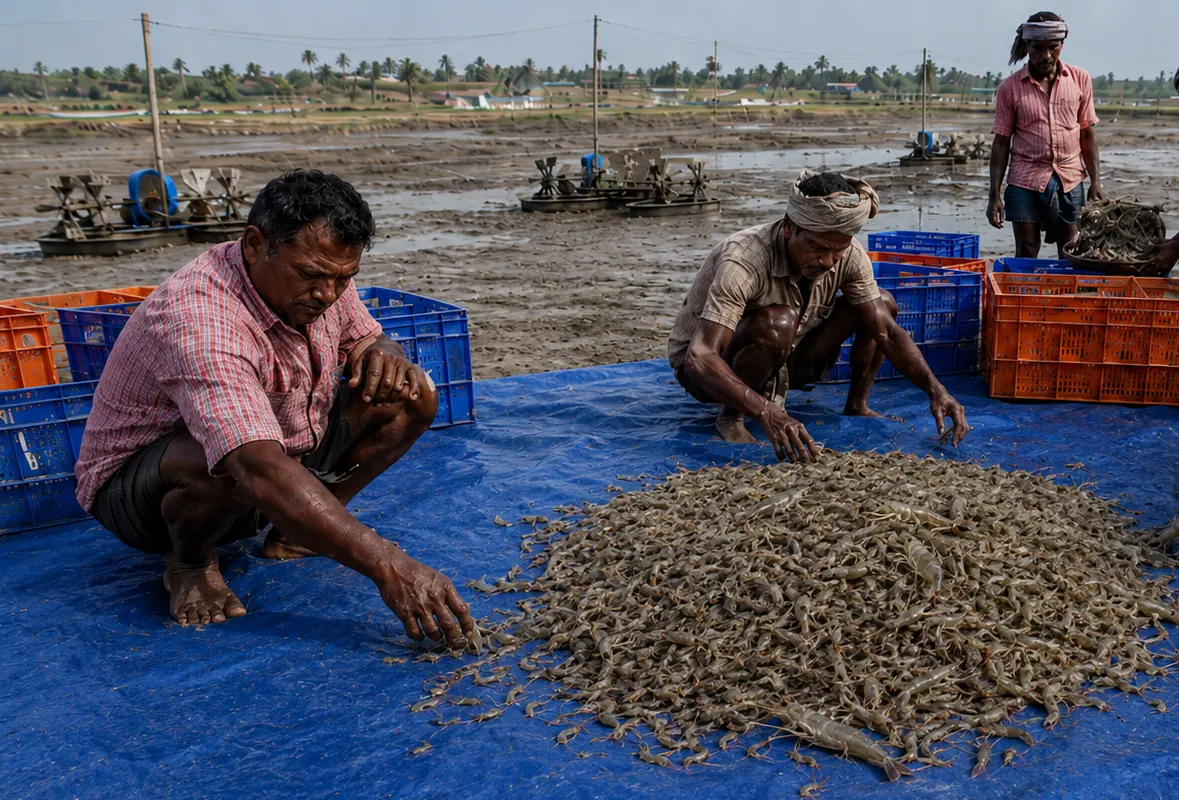
Introduction
When we look at the biggest hurdles in Indian vannamei farming today, Enterocytozoon hepatopenaei (EHP) stands out because it plays by different rules. It doesn't give us the sudden, obvious warning signs of mass mortality like WSSV. Instead, it acts as a silent profit-killer, quietly draining margins through stalled growth, poor FCR, and severe size variation.
How Does EHP Get In?
EHP spores are incredibly tough, typically finding their way into grow-out systems through three primary routes:
Infected Post-Larvae (PL): Stocking seed that carries a low-level, undetected EHP load right from the hatchery.
Spore Carryover in Soil: Spores surviving on the pond from a previous crop due to inadequate pond preparation.
Water & Live Vectors: Untreated intake water carrying wild crabs, copepods, or polychaetes harboring the parasite.
While all three routes are real risks, we look at how a low-level infection introduced through the seed can play an important role in EHP outbreaks.
The Multiplication Loop
Even if 99% of your shrimp seed are perfectly clean, a tiny 1% infection at stocking can still stop your whole pond from growing. The pond environment takes that tiny 1% trace and turns it into a non-stop infection loop.
Step 1: Inside the Tissue: In that initial 1% of infected shrimp, the parasite multiplies heavily inside the epithelial cells of the hepatopancreas, quietly destroying their ability to absorb nutrients.
Step 2: Massive Shedding: As these infected digestive cells rupture, millions of microscopic, mature spores are excreted directly into the pond through the shrimp's feces.
Step 3: The Bottom-Feeding Trap: Shrimp are natural scavengers that constantly graze on the pond floor. The healthy 99% of the shrimp naturally ingest this contaminated sludge and feces.
Step 4: Exponential Takeover: Every single time a healthy shrimp re-ingests these shed spores, a brand-new cycle of replication begins. Within a matter of weeks, this continuous recycling causes the overall pathogen load to skyrocket, moving the pond-wide infection rate from 1% toward 100%.
Why the Grow-Out Pond Becomes an EHP “Factory”
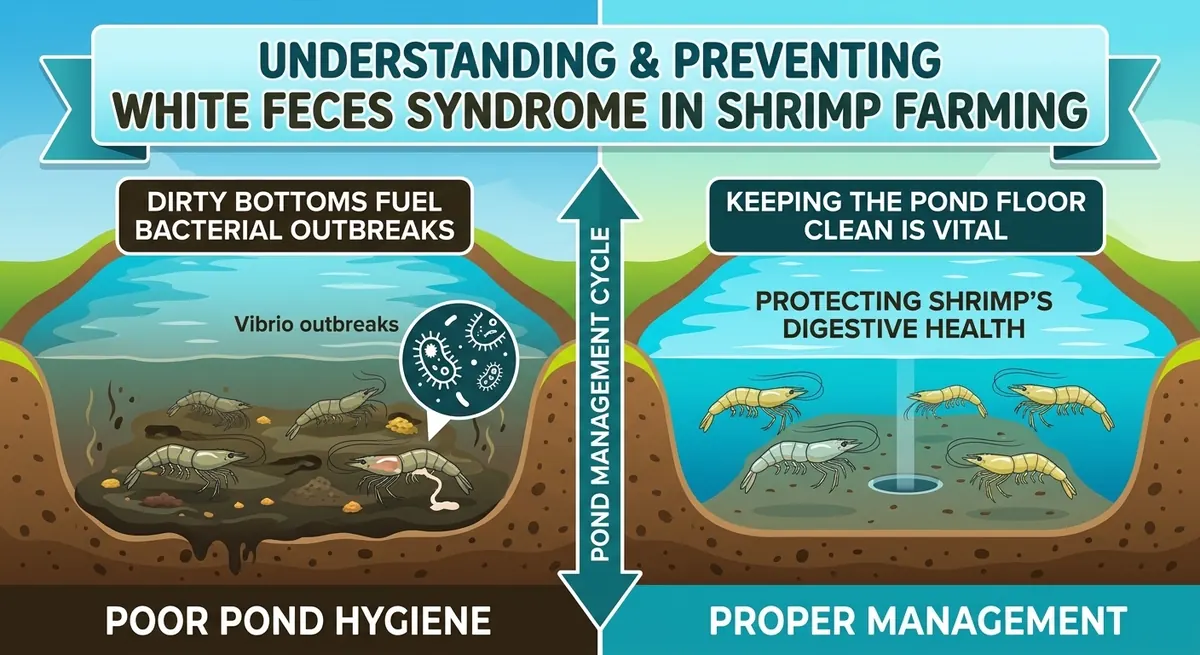
This learning process highlights why intensive farming setups are particularly vulnerable. When we stock at higher densities and increase daily feeding, organic sludge naturally builds up on the pond bottom.
This accumulated waste acts like a giant sponge, trapping and concentrating the shed spores. Because the parasite multiplies inside host tissues rather than freely in the water column, the sludge becomes a direct delivery system. As healthy shrimp graze on this highly concentrated waste, the infection pressure breaks past their natural defenses. Growth halts completely, shells become soft, and size variation widens across the culture.
Key Takeaways from the Spore Loop
The Seed Trigger: A trace, low-level infection in just 1% of your PLs can act as the spark for a full pond outbreak.
The Grazing Risk: Ponds amplify EHP because the shrimp's natural bottom-feeding behavior ensures they constantly consume spore-laden feces and sludge.
Tissue Target: The multiplication happens primarily inside the shrimp’s digestive organs, turning the host into a spore-producing factory.
Final Word
What this teaches us is that once EHP takes hold inside a shrimp, we cannot easily treat it from the inside. Because the parasite constantly multiplies in the organs and sheds out through the feces, our best defense is to physically remove that waste before other shrimp can eat it.
Protecting our investment means shifting how we manage the pond floor. It is not just about using strict PCR screening to catch that initial 1% at stocking; it is about using aggressive central drainage and daily siphoning to flush out infected feces and waste during the crop. By actively removing those shed spores from the bottom, we break the recycling loop and protect our harvest margins.
Community
No approved comments yet. You can start the conversation.